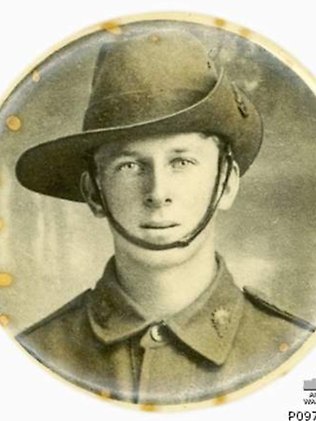
 I always feel torn about Anzac Day. God knows I want to join with everybody else on Facebook, posting poppies and pictures of long-dead relatives, sent far away by the Empire and sacrificed for a few metres of rocky ground in a foreign land.
As the daughter of two WWII veterans, and the grand-daughter of a WWI decorated hero, Anzac Day was always a special day in our house when I was a child. A bit like Good Friday, it was a sad day, a sombre day where we always put the march on TV, and watched to see if we could catch a glimpse of one of our friends or relatives marching. We weren’t really Dawn Service people, although I think my parents used to go along before they had all of us to slow them down.
Our great uncle Johnny Mountjoy was one of the original Anzacs, killed at Gallipoli, and family legend has it that his mother saw him lying “black and dead” in her dreams long before she received the news of his death. Johnny’s brothers also served, and bore the mental scars their whole lives, coming home to live on a street in the Upper Swan which our family referred to thereafter as “shellshock corner.”
My maternal grandfather Geordie Mulligan enlisted in the AIF in 1915 at the age of 17 (he fibbed about his age), was wounded twice and returned to the front both times, awarded the Military Medal for “ bravery and devotion despite personal danger” at Anzac Ridge, and spent 9 months in a German POW camp before finally being repatriated back to Australia in 1919. As if this service was not enough, he enlisted again in WWII as a sergeant from 1941-45, when he was finally discharged from the armed forces at the end of the war.
I think it’s fair to say there’s a solid Anzac pedigree in my family, yet my struggle with the “celebration” that the day has now become, persists. I feel great pride, but also great fear when I see the increasingly overt symbols of jingoistic patriotism displayed on the day. The great WWI poet Wilfred Owen served on the Western Front, was awarded the Military Cross and was killed in action a week before the Armistice was signed. No one could have had a greater entitlement to comment on that war, and his haunting words as he describes a gas attack leave us with a message we do well to remember:
“If in some smothering dreams you too could pace
Behind the wagon that we flung him in,
And watch the white eyes writhing in his face,
His hanging face, like a devil’s sick of sin;
If you could hear, at every jolt, the blood
Come gargling from the froth-corrupted lungs,
Obscene as cancer, bitter as the cud
Of vile, incurable sores on innocent tongues,
My friend, you would not tell with such high zest
To children ardent for some desperate glory,
The old Lie; *Dulce et Decorum est
Pro patria mori”
*Sweet and proper it is to die for the Fatherland
Lest We Forget

 Gay Taylor