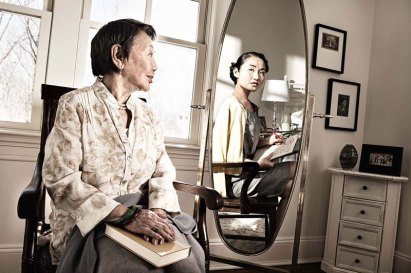
Thou art thy mother’s glass and she in thee
Calls back the lovely April of her prime
(William Shakespeare: Sonnet 3)
The passage of time: how commonplace, how relentless and, unless you die young, how totally unavoidable. There’s something about the transformative nature of time that I have always found so compelling, and sad/happy. Perhaps it’s just my Western cultural denial of death and decay, but I have always found the pace of change in myself and the people around me a bit disconcerting.
I was grabbing some after-work groceries a couple of evenings ago; it was cold outside, getting dark and the supermarket was busy and bit hassled as it always is at that time of day. I noticed a young couple near the vegie stands looking slightly harassed and getting tetchy with one another, and glanced again as they both looked a bit familiar. It wasn’t until they had passed me that I realised they had the grown-up versions of the faces of children that I knew. Living in a small town, you get to know which of your children’s schoolmates are dating whom, and for the first year or two after they all leave school, it all seems quite sweet and of course you expect them all to move to the city and meet other strangers and that’s that. There was something though about the body language between these two that told me that they were a totally established, long term, probably-thinking-about-getting-married couple, just like I had been, you know, a few years ago, but surely not so long ago that these primary school-aged children could have moved somehow into that spot …I mean, I realise that I’m not doing school lunches anymore, and maybe a couple of the “cool girls” from my year at school are now GRANDMOTHERS but, like, what’s happened here??!
I remember feeling the same way a couple of years ago when I first got onto Facebook and was able to connect with old school friends, some of whom I hadn’t seen since Year 12. I distinctly recall how strange it was seeing a picture of one of the guys with his son, who not only looked just like him, but was exactly the same age that my schoolmate had been the last time I saw him. It was such a peculiar Rip Van Winkel feeling, to be looking at the face of a familiar boy, knowing that the young fella I remembered was in fact the greying, middle-aged man standing next to him. What had happened to the boy I knew?
Living in a small town means that you get to see people born, learn to walk, have playdates with your own children, sing at assemblies, finish school, have their own babies and eventually become middle aged. You get to watch powerful community leaders and fearsome matriarchs weaken, lose their power and disappear from the committees and meetings and boards in which they played so vital a part, and which, at the time may have seemed impossible to run without them. You get to see, first hand, that nobody is indispensable, even if they feel irreplaceable, and you marvel that the PhD expert you now need to consult was someone you first met as he was pulled from his mother’s womb.
Having the opportunity to watch the effects of time within a small community is both disturbing and grounding. To see the waters close over other figures and to know that one day it will softly close over you as the life of the town flows on is healthy and humbling. The challenge is to try and live as George Bernard Shaw tells us:
This is the true joy in life, the being used for a purpose recognized by yourself as a mighty one; the being a force of nature instead of a feverish, selfish little clod of ailments and grievances complaining that the world will not devote itself to making you happy.
I am of the opinion that my life belongs to the whole community, and as long as I live it is my privilege to do for it whatever I can.
I want to be thoroughly used up when I die, for the harder I work the more I live. I rejoice in life for its own sake. Life is no “brief candle” for me. It is a sort of splendid torch which I have got hold of for the moment, and I want to make it burn as brightly as possible before handing it on to future generations.

 Gay Taylor