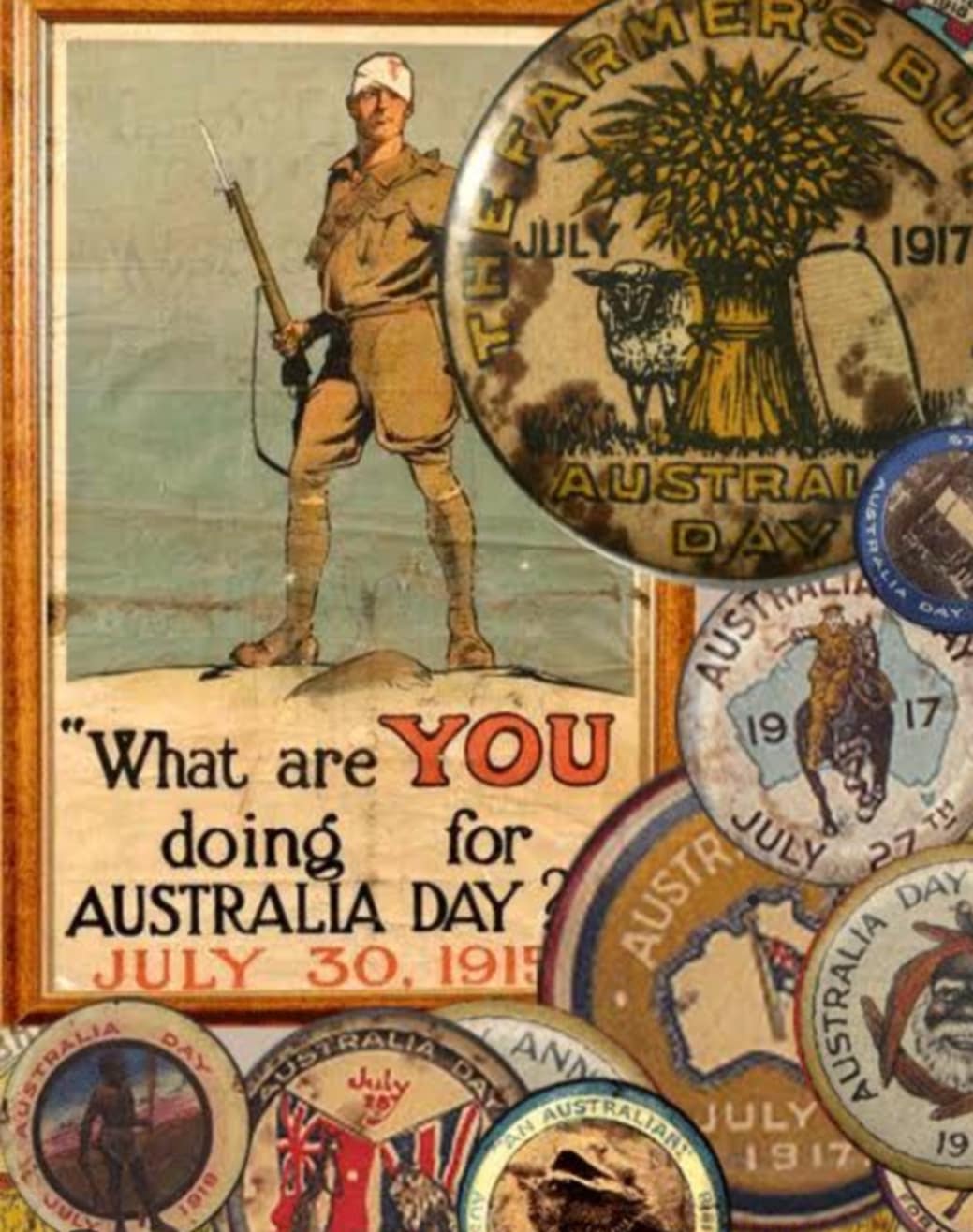
My heart is heavy as I write this, another piece about Australia Day. For the past few years, I’ve been posting little videos on the 26th Jan, trying to explain why, as an honourable nation, we need to change the date of Australia Day. What a happy moment it was when my little bogan-and-proud cousin told me after my last video that he had “never thought about it that way before”, and could now understand the problem. (See the video if you’re interested-it’s a bit chirpier than this article).
It seemed as though things were slowly starting to tip towards decency and fairness, with many organisations declining to participate in celebrating a date that causes heartache for many First Nations people, and some shire councils opting to move citizenship ceremonies to another day.
Sadly, those tender green shoots of hope were blasted by the scorching defeat of the Voice referendum, bringing with it a tighter, meaner spirit. An article in last week’s Sydney Morning Herald, titled :” Australia Day roars back into favour in wake of Voice referendum” stated that: “…Australians have shed their shyness over openly expressing their views on divisive social issues” , and “it is regretful that both major parties have allowed Australia Day to become an issue of division”.
This claim of divisiveness as a reason to avoid change is the same cynical lie used by the “No” campaign in the Voice referendum. With shameless guile, Peter Dutton and his team nobly opined that the one thing that would “divide” First Nations people from the rest of Australia would be giving them a say in matters that affected them. What utter, lying nonsense. The division already exists, yet we are asked to believe that taking the feelings of Aboriginal people into account when making decisions about them, or throwing a party on a different day are the real threats to cohesion. Considering that First Nations people are 26 times more likely to be imprisoned as children and have a suicide rate twice as high compared to the general population, I’m sure Dutton and his supporters are feeling reassured by the remarkable sense of unity they now share with the rest of Australia.
Changing the date of Australia Day should be, and can be a relatively simple process. It has been celebrated on many different dates since federation in 1901, including July 26th, 27th and 30th, and it was only in 1994 that January 26th became the national public holiday for Australia Day. So much for long-treasured traditions.
Explaining why it’s not in the best taste to insist on celebrating our national day on a date that commemorates the British first landing in Sydney cove seems to be a harder sell. In the new world order, it seems that taking a moment to consider the needs of others is no longer seen as a sign of civility, but of weakness. Trampling on other peoples’ feelings, especially those of marginalised groups is a reason for self-congratulation: “suck on that, loser!!”
What would we actually lose by extending grace and courtesy to First Nations people about the date of Australia Day? Would we lose a public holiday? No. Would we lose the opportunity to have a fantastic day at the beach, a barby, pool party, fireworks on the foreshore? No. Would we miss being able to feel pride as we watch citizenship ceremonies, and reflect on all that makes this country so wonderful? No. Changing the date of Australia Day takes nothing from us and confers dignity and respect on both sides. Changing the date of Australia Day brings people in. People who hold a very special place in the history of this land. People who belong here, just as we do. Changing the date adds to, not subtracts from, the joy and pride we all feel in being Australian.
There are 364 other days to choose from, but like a greedy child who has already got all the toys, we want that too. I despair when I see the alternative Prime Minister and the alternative Premier of WA ostentatiously state that their very first action if elected is to make sure that the Aboriginal flag is erased from view. Why? Why are they obsessed with expunging any visible evidence of the original peoples of our nation? If you asked them, they would bleat about “divisiveness” again, pretending that they themselves are not the architects and beneficiaries of the division. Pretending that their sticky, soiled fortunes do not rest on fomenting and fanning as much division and hate as they can convince you to swallow. They want you to believe that you are too weak, too fragile to face up to reality. They want you to believe that by acknowledging that January 26th represents a lot of suffering for Aboriginal people, that somehow the whole fabric of Australia will be destroyed. They believe that Australians do not have the moral courage to look history in the face, because they are cowards themselves. They don’t believe that you have the capacity to hold two simultaneous realities: That you love this country, but you know who has paid the biggest price for its establishment.
I know what happened in the past. I accept it and know it wasn’t my fault. I am not too afraid to look at it. I don’t need to cover it with lies and bluster and confected concern about “divisiveness”. I also know that Aboriginal people weren’t the only people who suffered in the building of Australia as it is today. My Dad was hungry and cold. My great, great grandparents were whipped and starved and shackled and chained, chucked onto a prison hulk for stealing food and dumped half a world away to scratch around in the red dirt and survive. That doesn’t make massacring mothers and babies, old men and women, stealing kids, beating, and raping Aboriginal people ok. It doesn’t make these things magically disappear and not matter. I am not responsible for these things , but I’m not so spineless that I can’t open my eyes and see what happened and feel sad, and not want to put on a bloody party hat on Jan 26th.
Change the effing date.

 Gay Taylor
Hello Gay,I totally agree with you and have refused invitations to Australia Day events. The total callousness, ignorance and racism
LikeLike